
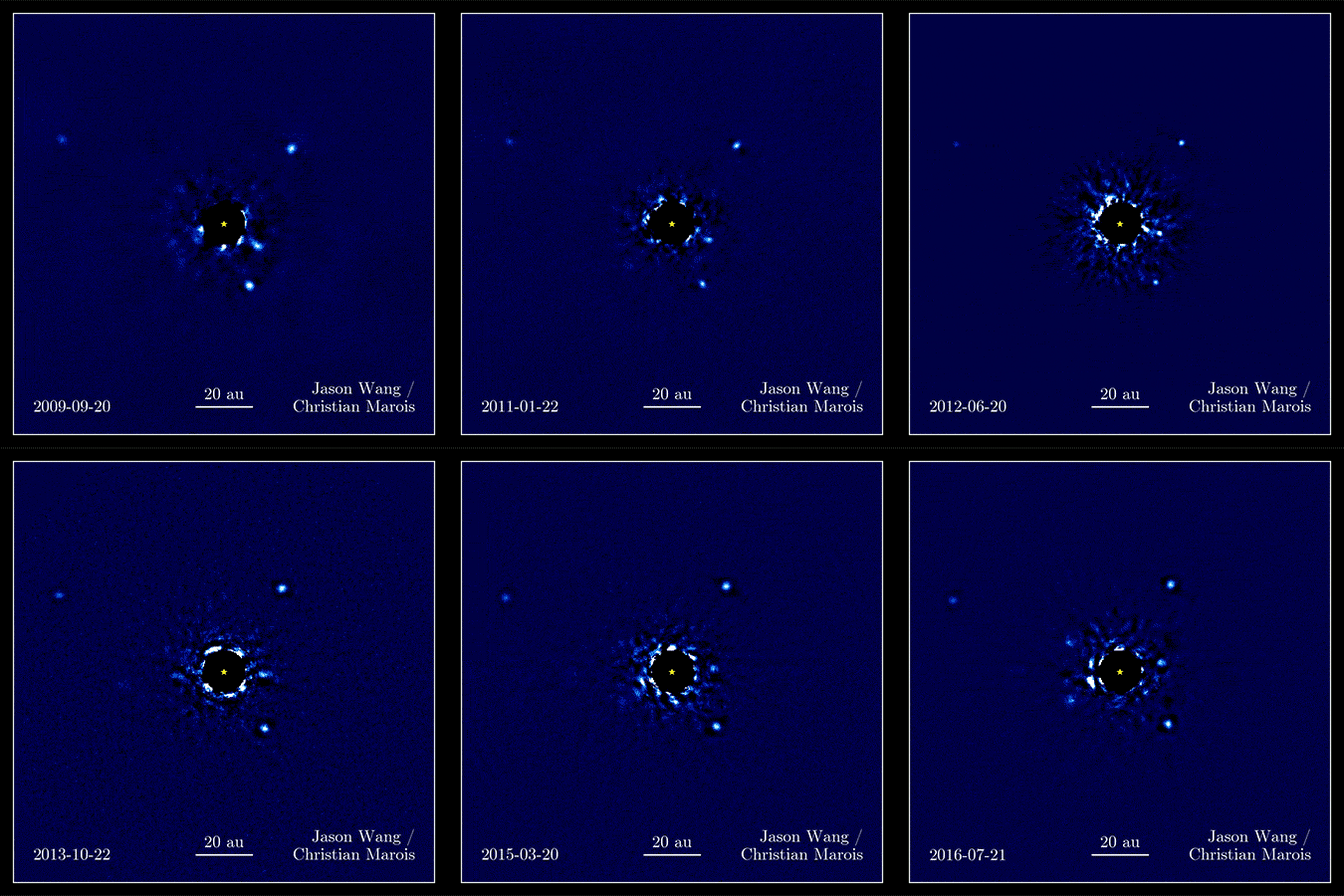
The blotted-out star in the center of the video is called HR 8799, and it’s in the constellation Pegasus, about 129 light-years from Earth. About five times brighter than the sun, HR 8799 is just 30 million years old, the equivalent of a stellar newborn.
Its four visible planets are bloated and large, each more massive than Jupiter, and take between 40 and 400 Earth-years to complete one orbit. It’s possible that undetected smaller, rocky planets live closer to the star—and that a fifth large world is hiding among a dusty debris disk on the outskirts of the system.
This system of exoplanets is one of the first scientists have directly imaged. The star is near enough—and the planets are big enough—that one of the Keck telescopes atop Hawaii’s Mauna Kea could see it. UC Berkeley graduate student Jason Wang made the video by compiling seven images of the system taken from August 2009 until the summer of 2016. He then interpolated the motion of the planets between the still frames.
That is truly amazing.
Mind blowing.
Lies! “interpolated the motion of the planets between the still frames.” Interpolated isn’t even a word. Liberal alternative fake news!