E! NEWS

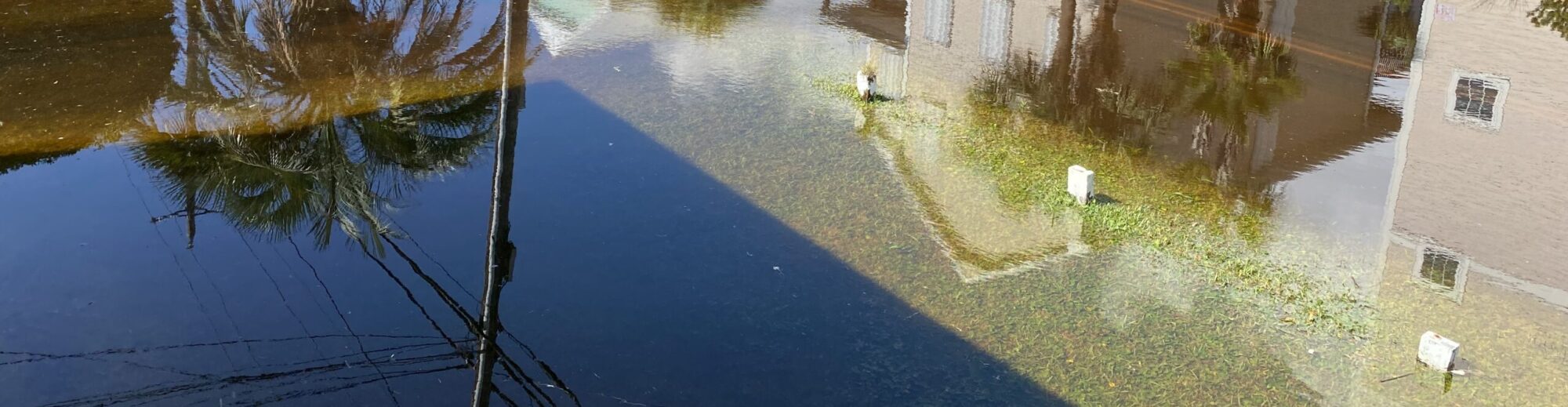
I generally hate flavored beer. And I hate shellfish. So, this beer is not for me:
Pearl Necklace is brewed with local Rappahannock River Oysters and is the perfect compliment to everyone's favorite aphrodisiac - whether they are grilled, fried, stuffed, or raw.
Someone is about learn about The Streisand Effect
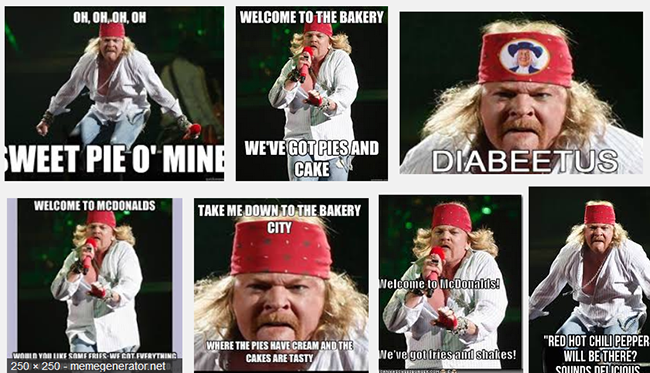
Axl Rose sends notice to Google demanding takedown of fat memes.
Guns N' Roses frontman claims he owns the photos, and no longer wants them available online.


Growing up in a little town in upstate New York, I took all the standard NYS high school history classes. We spent a lot of time on European history, and far more than you'd expect on the Chinese Revolution. And of course we did a lot of US history - the Louisiana Purchase, the Monroe Doctrine, the Civil War, etc.. But we didn't do much on the French and Indian Wars, or on the Revolutionary War. What we did spend on the Revolutionary War made it seem like everything happened in Boston or Pennsylvania. At the time, this didn't seem odd, because I obviously didn't know any better.
But lately, I've started reading about the history of the Hudson valley and I'm frankly astounded that we didn't spend an entire year on the history of the area.
The town is called Hudson Falls, formerly Sandy Hill, in the upper Hudson valley of NY. It's about an hour north of Albany NY, at the south-east corner of the Adirondack mountains, just over two hours south of the Canadian border, and a dozen miles from the south ends of both Lake Champlain (100+ miles long) and Lake George (30+ miles long). For a century, the native Americans, the British, French, and eventually the American colonies, fought for control of the routes between Albany (which is as far as you can sail up the Hudson River from NYC) and the St Lawrence River at Montreal (the northern route to the Atlantic). The two lakes were key parts of those routes.

There's a town called Whitehall a few miles to the north-east, on the south end of Lake Champlain, that has a curious little historical-marker-type sign on the main road claiming that Whitehall was the birthplace of the US Navy. I always giggled at that. How could that be? The town is hundreds of miles from the sea! Well, the US Navy actually started out fighting the British on Lake Champlain. And that is where US General Benedict Arnold had some of his biggest victories against the British.
Fort Ticonderoga sits on Lake Champlain guarding the pass between that lake and the northern tip of Lake George. On the map there, Lake George is in the center and the long skinny southern part of Lake Champlain is on the top-right. There's a reconstructed fort on the south end of Lake George called Fort William Henry which was a key location in the French and Indian Wars (it's where the big battle in "Last Of The Mohicans" is set). Several other forts were located on Lake George, as well.
One of the main streets in Hudson Falls is named Burgoyne Ave., after the British General. While resupplying in late summer 1777, he camped with 7,000 soldiers in what is now a town park. That's several thousand more people than currently live in the town. When I lived there, they'd open the fire hydrants to flood the field in the winter, and let it freeze. I, and every other boy in town, played hockey there.
After Burgoyne's resupply, he started his march south to clean the American rebel army out of the Hudson valley.
The grounds of the high school and middle school are bounded on the east by Burgoyne Ave; and on their west, Lafayette St - named after the French General who fought with the US in the Revolution. No teacher ever said to us "Hey, by the way those two streets, Burgoyne and Lafayette, they're named after..."
There's a town called Gansevoort just north of Saratoga. I'd always assumed it was just another wacky Dutch place name - probably meant "hill of wormy apples" or something. But no, it's named after Peter Gansevoort, a Revolutionary War Colonel who prevailed in a fight with a British column at Fort Stanwix on the Mohawk river to the west of Albany, thus preventing them from joining up with Burgoyne's forces on their march down the Hudson.
There's a town just south of Hudson Falls called Fort Edward which was the location of an important fort during all of the wars. Lots of fighting around there. The Hudson is basically un-navigable north of Fort Edward, so Indians called it "The Great Carrying Place"; that's the spot just below the falls at Hudson Falls (Baker's Falls) where, if you were going north, you had to pull your boat out of the Hudson and carry it the dozen or so miles over land to Lake George or Lake Champlain. Susan B Anthony taught school there for a while.
Fort Ann is to the north-east. Fort Miller, to the south. "Hey, what's with all the 'Forts'?" Nobody ever bothered to explain. And, just south of that is Saratoga - the location where the US, including (and some say lead by) Gen. Benedict Arnold, met Burgoyne's army and defeated it. The British left their camp in what is now Hudson Falls, marched 20 miles south to a field outside Saratoga and were defeated. After that battle, the French and Dutch felt comfortable joining on the US side against the British, which ultimately ensured the American independence. My father now lives less than two miles from the Saratoga battlefield - it's a national park. I've still never seen it. No teacher ever told me what happened there. Nobody ever took us on the 20 minute bus ride to do a field trip there. Nobody ever explained what turned Arnold from victor to traitor (it had a lot to do with personal politics and being passed over for promotion as well as his being denied credit for his contributions at Saratoga - and money, and the ladies).
They just didn't teach that stuff.
It's baffling.
Wife had some surgery last week which left her temporarily incapacitated. So I'm busy assisting until she's recovered.
Heat up some sugar on the stove, and it sure seems to melt, but if it were just a simple phase change, then melted sugar would be perfectly clear, not brown. Melted sugar would taste simple and sweet, not bitter and complex. Melted sugar would cool into crystals, not glass. None of those things are true because heat doesn't cause sugar to change phases. Heat breaks it down into something new: caramel.
In fact, caramel is so unlike sucrose, C12H22O11, that its nature can't be expressed by a single chemical formula. Instead, it's a mixture of caramelan (C15H18O9), caramelane (C12H9O9), caramelen (C36H48O24), caramelene (C36H25O25), caramelin (C24H26O13), and over a thousand other compounds "whose names," one scholar lamented in 1894, "science seems to have invented in a fit of despair.
"Realizing that caramel contained more permutations of carbon, hydrogen, and oxygen than their cutesy naming scheme could accommodate, scientists gave up on trying to define it. They even gave up on nailing down a definitive melting point for sucrose. Unlike ice, or even coconut oil, sugar refused to liquefy at a single, consistent, scientifically reproducible temperature. The point of caramelization proved even trickier to isolate, in some experiments occurring at a mere 340°F and in others holding out past 360°F.
If you think that's confusing, you're not alone. Scientists have a better grasp of quantum mechanics than of caramel, which is still poorly understood. But in 2011, a team of researchers finally established that caramelization is a product of thermal decomposition, not melting (you can read the paper here). Not only that, they determined that it's technologically impossible to document the melting of sucrose independent of caramelization.

While Republican state leaders have complained about being "bullied" by the federal government over House Bill 2, lobbyists in Raleigh tell WRAL News they and the businesses they represent are being bullied by state lawmakers seeking to silence business opposition to the new law.
Lobbyists say they've been told – either directly by legislative leaders or by lawmakers' staff – that, if they or the businesses they represent speak out publicly against House Bill 2, they can expect retribution from House and Senate leaders.
Legislation they want won't move, and other bills could actually target them.
WRAL News spoke with 11 lobbyists who have experienced or are aware of such actions, but none would speak on the record for fear they would lose business or be targeted for retribution. One has already lost business.

