Ho ho ho! boys and girls!
Here's a lovely little short story sent in from Mr. A. C. Clarke, late of Minehead, England. It's called "The Star", and I hope it helps you remember the reason for the season!

Ho ho ho!

Ho ho ho! boys and girls!
Here's a lovely little short story sent in from Mr. A. C. Clarke, late of Minehead, England. It's called "The Star", and I hope it helps you remember the reason for the season!
Ho ho ho!

We're going to shake things up here at ok-cleek.com; 'tis the season. By changing the Cascading Style Sheet that controls how our legendary content appears, we will attract new eyeballs and convert those pageviews to a steady revenue stream which will provide iterative monetization for our mid-term enterprise-level market domination strategy. Swimlanes. Product champions. Agile.

Ho Ho Ho.
In August 1966, as the Beatles made their way to Washington during what would ultimately be their last tour, a group of six scheming 15-year-olds from the District’s Chevy Chase neighborhood developed a plan: 1. See the concert. 2. For free. 3. By sneaking into what then was called D.C. Stadium. 4. Disguised as the Beatles’ opening act, a band called the Cyrkle.
Incorporated into this plan were makeshift costumes, a rented limo, decoy groupies and the unwitting participation of D.C. police, who provided the fake band with a motorcade escort.
This year, it's:
That's pretty dumb. But what would make it great is if the Olympic committee chose the five events at random every Olympics and didn't reveal them until the first day of competition. You sign up, you gotta do them all. The possibility of no medals is real.
2020:
That would be a true test of an athlete.
It all went down after the DNC, when Larry Sanders stopped the whole show to cast his vote for his brother, and reports are Hillary was FURIOUS.
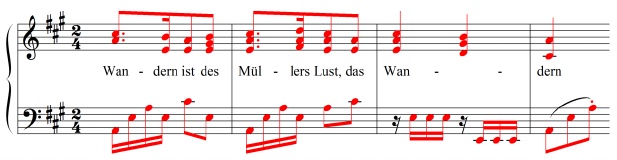
Moser's dictionary of music describes the different emotional content of major and minor chords as follows:
There is a great deal of truth to the statement that major chords sound happy and minor chords sound sad, despite the primitive nature of the idea.
The Swiss music theory expert Gustav Güldenstein described the major tonic as symbolically including an awareness of one's own will, as corresponding to a feeling of a sober-minded contentment with the present moment: The tonic can be symbolically represented by a person standing upright in life. He is at rest as long as he is not moving, yet he is under tension in that he must constantly overcome a sensation of heaviness.
The Ullstein dictionary of music also attributes this chord with the ability to communicate an intention, describing it as "affirming". Music-theory specialists concur that the third in the major tonic is a leading note which shows only a mild inclination to resolve upward. Applying the Theory of Musical Equilibration to an analysis of this leading-tone effect leads us to a logical conclusion: we identify with the desire for the third not to change. This also takes into account what Ernst Kurth described as internally translating the physical experience of the note into another essential quality.
To phrase it differently, when a major tonic sounds, we feel only a very mild desire for something indefinable and substantial to change. From an emotional perspective, we can describe this sense of will as identifying with a sober-minded sense of contentment with the here and now. This conclusion is nearly identical in content to the way Gustav Güldenstein described the major tonic above.
1.2.2 Why do minor chords sound sad?
The effect of a minor chord can also be logically explained by applying the Theory of Musical Equilibration. The Moser dictionary of music describes the nature of the minor chords as the major being clouded by the minor. When the definition is interpreted from this monistic perspective, the minor third is not seen as an independent interval, but rather as a "clouded" major third which has been robbed of its leading-note tension. The Ullstein dictionary of music describes a minor chord as a suppressed major.Upon applying the Theory of Musical Equilibration to the minor chord here, we see a clear result if we replace the mental image of Kurth's effects of equilibration (i.e. the urge for musical resolution) with the image of identifying with the desire for things to remain as they are. In a major tonic, we identified with a desire for the chord not to change, but in the minor key, that sense of will now appears clouded, suppressed. The feeling of contentment is clouded by a feeling of discontentment. The experience of listening to a minor chord can be compared to the message conveyed when someone says, "No more." If someone were to say these words slowly and quietly, they would create the impression of being sad, whereas if they were to scream it quickly and loudly, they would be come across as furious. This distinction also applies for the emotional character of a minor chord: if a minor harmony is repeated faster and at greater volume, its sad nature appears to have suddenly turned into fury.
Stranger Things was only eight episodes long?
W
T
F
?
The office smells like old diapers this morning. Someone burned coffee.
But somehow, "burned coffee baby shit" turns up zero Google hits.
(I hereby claim the phrase)